Surfactant solutions for curious formulators
PriceTech Group is a specialty chemical supplier that loves the alchemy of surfactants. Our portfolio of amine oxides, betaines, sulfosuccinates, phosphate esters, hydrotropes, quaternary ammonium compounds and custom blends empowers chemists across home care, personal care, industrial cleaning, pet care and oilfield applications. We believe every formulation is a story — when you choose the right chemistry, you can turn a mundane cleaning solution into something magical.
Your products are as diverse as the people who use them. Whether you formulate a gentle shampoo, a heavy-duty degreaser or an odor-neutralizing pet spray, you need surfactants with purpose. At PriceTech Group we speak your language — we offer both the ingredients and the insight to help you craft formulations that perform beautifully. Take a tour of our surfactant families, explore by industry or talk to a specialist; your next formulation adventure begins here.
Browse by Chemistry — scroll to the chemistry category grid below
Browse by Industry — jump to industry application pages
Request Technical Support — open contact form for technical questions
Chemistry Families
Each tile below links to a detailed category page with technical information and products. Click the chemistry name to explore the full portfolio for that surfactant family.
Amine Oxides
Description
Amphoteric/weakly cationic surfactants; water soluble and reduce surface tension. They boost foam, thicken formulas and act as co-surfactants — known for mildness and compatibility with anionic surfactants.
Typical Functions
Foaming, cleansing, viscosity enhancement, emulsifying
Industries
Household & institutional cleaning, personal care, vehicle wash, oilfield, industrial cleaning
Amphoteric Surfactants / Betaines
Description
Bear both positive and negative charges; very mild and effective across a wide pH range. Betaines boost foam, stabilize viscosity and are compatible with both anionic and cationic surfactants.
Typical Functions
Foam boosting, mild cleansing, viscosity control, co-surfactant
Industries
Personal care, household cleaners, pet care, vehicle wash
Sulfosuccinates
Description
Anionic surfactants providing excellent wetting and foaming with good foam stabilization. They are mild to skin and offer low irritation potential.
Typical Functions
Wetting, foaming, emulsifying, dispersing
Industries
Shampoos, industrial cleaners, oilfield demulsifiers, emulsion polymerization
Phosphate Esters
Description
Versatile anionic surfactants made by reacting alcohols with phosphoric acid. Tunable water/oil solubility. Multifunctional: detergency, foaming, emulsification, lubricity, corrosion inhibition.
Typical Functions
Wetting, emulsifying, dispersing, lubricating, anti-static
Industries
Industrial & metal cleaning, oilfield, emulsion polymerization, coatings
Hydrotropes
Description
Small molecules that increase surfactant solubility and cloud point, keeping high-actives products clear. Multifunctional: also provide wetting, detergency and corrosion inhibition.
Typical Functions
Solubilizing, wetting, detergency, cloud-point raising
Industries
Industrial & institutional cleaners, personal care, oilfield, metal cleaning
Quaternary Ammonium Compounds (Quats)/Cationics
Description
Cationic surfactants with antimicrobial properties; used in disinfectants, sanitizers, fabric softeners and conditioners. Positive charge delivers antistatic and conditioning effects.
Typical Functions
Disinfection, conditioning, antistatic, emulsifying
Industries
Household cleaning, odor control, personal care, pet care, fabric softeners
Specialty Surfactant Blends
Description
Custom blends combining multiple surfactant classes for tailored performance — balanced foam, improved mildness or enhanced soil removal.
Typical Functions
Multi-functional: foaming, wetting, emulsifying, conditioning
Industries
High-performance cleaners, personal care, any application needing optimized systems
Explore by Application
Not sure which surfactant family fits your formulation? Start with your industry. Each tile links to a dedicated page with recommended chemistries and example formulations.
Household & Institutional Cleaning - Surfactants for hard-surface cleaners, laundry detergents, dishwashing liquids and disinfectants.
Personal Care - Ingredients for shampoos, body washes, facial cleansers, hand soaps and hair conditioners.
Pet Care - Surfactant systems designed for gentle pet shampoos, deodorizers and grooming products.
Vehicle Wash - Chemistries for car wash detergents, truck cleaners and detailing products.
Odor Control - Specialized surfactants and odor neutralizers for odor removal in household, pet and industrial settings.
Oilfield - Surfactants that enhance oil recovery, control foam, disperse asphaltenes and improve drilling fluids.
Deep-Dive: Our Core Surfactant Families
Amine oxides are amphoteric surfactants that behave as cationic in acidic solutions and nonionic in alkaline conditions. Their water solubility and ability to reduce surface tension make them effective co-surfactants and foam boosters. Amine oxides stabilize foams, increase viscosity and enhance detergency; they are mild and compatible with anionic surfactants, making them ideal for cleaners that require rich foam and thick texture. Use them in laundry detergents, dishwashing liquids, car wash shampoos, metal cleaners and hair care formulations.
Amphoteric Surfactants / Betaines
Betaines carry both positive and negative charges, allowing them to behave as cationic in acidic formulations and anionic in alkaline ones. They provide excellent foam boosting, viscosity control and mildness. Common examples such as cocoamidopropyl betaine remain stable over a wide pH range of 4–10. Amphoteric surfactants are widely used in personal care products like shampoos, body washes and baby cleansers because they reduce irritation and improve conditioning. They also find use in hard-surface cleaners and pet care products.
Sulfosuccinates are anionic or amphoteric surfactants known for their outstanding wetting and foaming abilities. They reduce surface tension and provide stable, creamy foam. These surfactants are mild to the skin and exhibit low irritation, making them suitable for shampoos, bath products and baby care. In industrial applications they act as wetting agents, dispersants and foam stabilizers in emulsion polymerization, dewatering and oilfield formulations.
Phosphate ester surfactants are created by reacting phosphoric acid with alcohols. Their structure can be tuned to provide water solubility or oil solubility, resulting in a family of anionic surfactants used for wetting, dispersing and emulsification. They offer a rich mix of properties including detergency, foaming, emulsification, solubilizing, defoaming, hydrotropicity, electrolyte tolerance, lubricity and corrosion inhibition. These capabilities make phosphate esters versatile ingredients in industrial cleaners, metal cleaners, oilfield additives, paints and coatings.
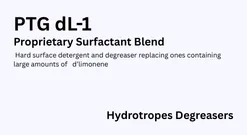
Hydrotropes are small, highly soluble molecules that increase the solubility of hydrophobic compounds and raise the cloud point of surfactant solutions. Multifunctional hydrotropes also act as wetting agents, detergents and corrosion inhibitors. They enable high-alkaline or high-acid cleaners to remain clear while maintaining active levels of surfactants. Hydrotropes are valuable in industrial cleaning, institutional cleaners, oilfield operations and personal care products where clarity and solubility matter.
Quaternary Ammonium Compounds (Quats)/Cationics
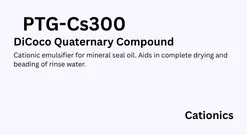
Quats are cationic surfactants with nitrogen atoms carrying a permanent positive charge. They exhibit antimicrobial activity and are widely used as disinfectants and sanitizers. Their positive charge also delivers antistatic and conditioning effects in fabric softeners, hair conditioners and personal care products. Quats often double as emulsifiers and can be blended with nonionic surfactants to produce ready-to-use disinfectants, odor neutralizers and hard-surface cleaners.
Highlighted Ingredients
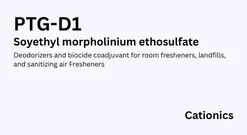
PTG-D1™ — Cationic Odor Neutralizer
PTG-D1™ is derived from soybeans and complexes malodorous materials to eliminate odors rather than masking them. It provides antistatic, lubricity and detangling properties alongside odor neutralization. Useful in hair dyes, carpet and fabric treatments, pet care sprays and fabric softeners. Visit the product page to request a sample and download the TDS.
Lauryl Amine Oxide
An amphoteric surfactant that acts as a foam booster and viscosity modifier across a wide pH range. Mild and skin-compatible, it enhances foam and cleansing while improving grease cutting. Key applications: liquid laundry detergents, manual dishwash, bathroom cleaners and shampoos.
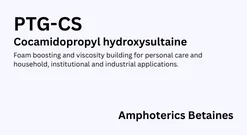
Coco Betaine (Cocamidopropyl Betaine)
An amphoteric surfactant derived from coconut oil that boosts foam and improves viscosity while reducing irritation. Compatible with both anionic and cationic surfactants. Used in body wash, facial cleanser, shampoo, conditioner, shaving cream, mouthwash and household cleaners.
Disodium Laureth Sulfosuccinate
Provides excellent washing, emulsifying, dispersing and wetting properties with low irritation. Yields creamy foam and is gentle on skin, making it ideal for shampoos, shower gels, baby cleansers and bath products.
Phosphate Ester Surfactant
Anionic surfactants delivering wetting, emulsification, dispersing and lubricating properties. Combines detergency and electrolyte tolerance with lubricity and corrosion inhibition. Used in metal cleaners, industrial degreasers, oilfield formulations and coatings.
Surfactant Selection: Science + Art
Choosing the right surfactant is both a science and an art. Formulators must consider the performance requirements of the final product — wetting, emulsifying, foaming, detergency, conditioning or dispersing — and then evaluate the compatibility of various surfactant classes.
Key selection criteria to evaluate:
• pH compatibility — match surfactant chemistry to your formulation’s target pH range
• Foam profile — high, moderate or low foam depending on the application
• Mildness — particularly critical for personal care, baby care and pet care formulations
• Emulsification needs — oil-in-water vs. water-in-oil systems require different chemistries
• Regulatory compliance — ensure ingredient status on relevant chemical inventories
• Surfactant ratios — personal care formulations often blend 70–80% anionic with 20–30% amphoteric/nonionic for optimal mildness and foam
• pH targets — skin and hair: 5.5–7.0; hair care specifically: 4.5–6.0
At PriceTech Group we help you navigate these considerations. Our technical specialists can recommend surfactant combinations that deliver the desired foam, viscosity, detergency and mildness while meeting regulatory requirements.
CTA → Talk with a Technical Specialist — connect with an expert who understands both the science and the art of surfactant selection.
Documentation Available on Every Product Page
Every product page on the PTG site includes a full suite of technical documentation to support your development process:
• Safety Data Sheets (SDS) — detailed safety and handling information
• Technical Data Sheets (TDS) — key physical properties, performance data and formulation guidance
• Product specifications — chemical composition, purity and quality parameters
• Regulatory information — compliance with relevant chemical inventories and regulations
If you need additional data — certificates, test reports or regulatory dossiers — reach out directly. Our library is at your disposal.
Ready to Start Your Next Formulation?
We hope this hub inspires your next formulation journey. Whether you need a single surfactant or an entire system, PriceTech Group offers both the raw materials and the know-how. Request a sample to experience our chemistries first-hand, or connect with our technical team to explore ideas.
Request Product Sample — fill out a form to receive samples tailored to your application
Contact Technical Support — ask a formulation question, discuss performance goals or inquire about regulatory documents



Markets We Serve
Specialized surfactant solutions across diverse market sectors, each backed by technical expertise and proven formulations.


Certified
ISO 9001:2015

Certified
ISO 14001
Certified
GMP Certified Facility Acess